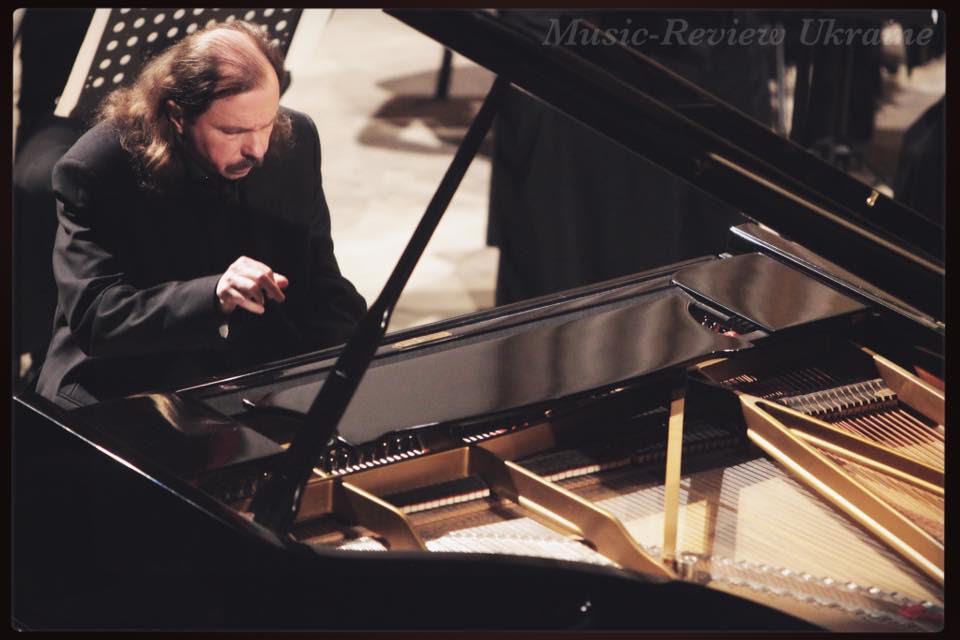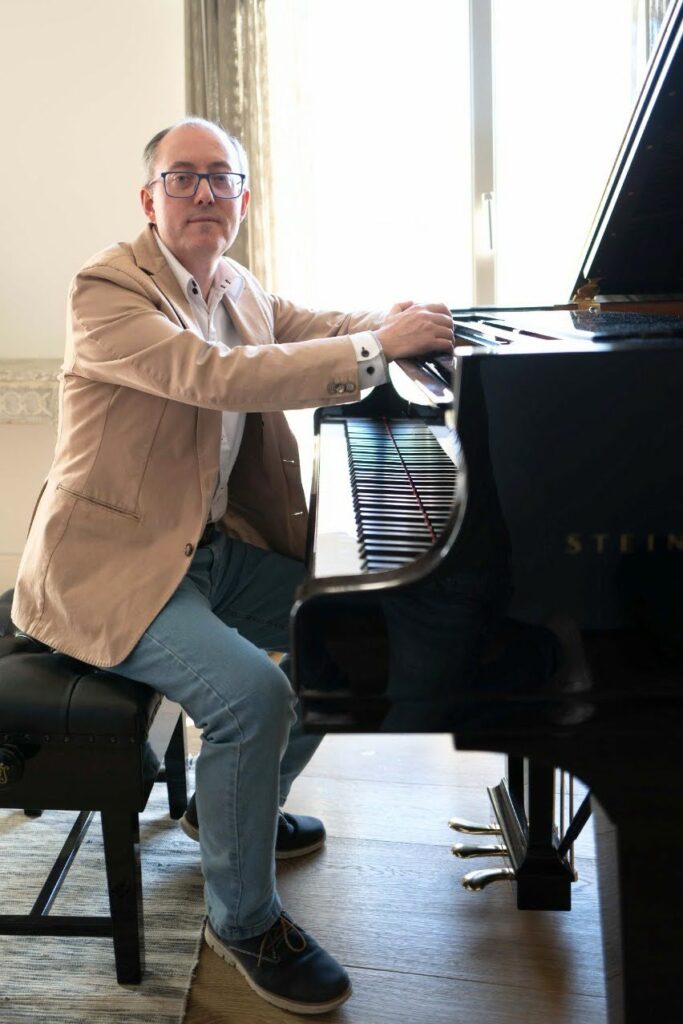



Konzertprogramm von Lilian Akopova (Deutschland) am 21.09.2025
Joseph Haydn (1732-1809)
Sonata in B minor, Hob. XVI:32
1.Allegro moderato
2.Minuet
3.Finale. Presto
Frédéric Chopin (1810-1849)
Sonata No. 3 in B minor, op. 58
1.Allegro maestoso
2.Scherzo. Molto vivace
3.Largo
4.Finale. Presto non tanto
Levko Revutsky (1889-1977)
Sonata in B minor, op. 1 (1912)
.
Sonata World in B minor
Haydn - Chopin - Revutsky
"The process which makes the tone poet choose this or that
fundamental key to express his feelings
is inexplicable like the creative genius itself,
which together with the thought gives the form, the vessel,
which encloses it".- Robert Schumann.
For today's concert, the genre of the
sonata was chosen, linked by the key of B minor.
This key had a
special aura in various epochs. In Johann
Sebastian Bach's Mass in B minor, it creates an atmosphere of
mourning, spiritual struggle and remorse. Jean-Philippe Rameau called it "sad and solemn".
Beethoven regarded B minor as a "black key"
and used it neither in his sonatas nor in
the symphonies.
Yet it was precisely in B minor that Schubert wrote his
famous symphony "Unfinished" in the key that
his predecessors Haydn, Mozart and Beethoven avoided in the
symphonic genre. In B minor,
Franz Liszt unfolded the dramatic, "Faustian"
phantasmagoria of his sonata. Alban Berg's Sonata op. 1
- an impressive
.
expressionist manifesto of the early 20th
century - is also in this key. The German
anthropologist Hermann Beckh described this
key as the "light of the spiritual world, which appears like darkness to the outer
senses".
In today's concert with Lilian Akopova,
three piano sonatas - by Joseph Haydn, Frédéric
Chopin and Levko Revutsky - will be performed, differing in time
and style, but linked by the common
key, through which the musical epochs of three
European cultures become visible.
Joseph Haydn (1732-1809)
Sonata in B minor, Hob. XVI:32
The Sonata Hob. XVI/32 was composed in the middle of the
1770s, when Haydn was working at the court of Prince
Esterházy and working intensively on operas, symphonies
and chamber music. It was a time of
creative upswing in which he experimented with form and
dramaturgy in various genres
. Haydn wrote around 60 piano sonatas,
but only one of them was in B minor. This work occupies
a special place in Viennese classical music.
Frédéric Chopin (1810-1849)
Piano Sonata No. 3 in B minor, op. 58
In April 1844, Chopin experienced the death of his
.
father. Deeply affected by this blow,
his health deteriorated. In the summer,
he withdrew to Nohant, the country estate of George Sand,
where he sought peace and quiet and devoted himself entirely to
composition. There he composed two gems
of his late style: the B minor Sonata op. 58 and the
Barcarolle op. 60.
The uniqueness of this sonata lies in its
structural and emotional depth. It combines the
traditional sonata form with elements of the ballad,
which are characteristic of the late Romantic style: a
dramatic dialog of themes in the first movement, a
transparent Scherzo, a meditative Adagio in B major
and a heroic finale.                   This transition from the
tragic beginning to the bright end is often interpreted as a symbol
of spiritual transformation.
Levko Revutsky (1889-1977)
Sonata in B minor, op. 1
Levko Revutsky's first piano teacher was
Mykola Lysenko, a friend of the family. His brother
Dmytro Revutsky, a well-known folklorist and
ethnographer, asked Lysenko to listen to the young Levko
- an event that determined the further direction of his
musical education.
Revutsky wrote his first piano sonata op. 1 in 1912
at the age of 23 and played it at the
.
entrance examination at the Kiev Conservatory. The
work marked his first significant pianistic
work. At the same time, he continued his studies at the
law faculty.
The sonata is written in a post-romantic style
, but is also strongly influenced by Chopin's poetics
.
In the large-scale form, Revutsky
unfolds a monumental dramaturgical structure. In that he
combines the three sentences into one unit, emphasizes
the composer through the monothematism of the
the inner unity of the work

Even in this first piano opus, he demonstrates a
rare ability to combine melodic lyricism with complex
harmonies - a style that later blossomed in his
symphonic and chamber music works.
Lilian Akopova (piano)
"I love to create contrasts in my programs.
What is decisive for me are the internal relationships between
the works, not the chronology." - Lilian Akopova
Born in Kiev and now living in Munich, the
Lilian Akopova is a prizewinner
of numerous international competitions, including first
prizes at the Vianna da Motta Competition (Lisbon),
at the Roma Competition (Rome), at the Carlet
.
Competition (Valencia), the Sulmona Competition
(Italy), the Steinway Competition (Munich) and
3rd prize at the prestigious Busoni Competition
(Bolzano). In 2014 she was awarded the German music prize
ECHO Klassik.
Lilian Akopova has performed in important
European concert halls such as the Berlin
Philharmonie and the Konzerthaus Berlin, in the
Herkulessaal of the Munich Residenz, in the Vienna
Musikverein, in the Athenaeum Bucharest, in the Salle Cortot
in Paris and in the Palau de la Música in Valencia. She has performed
with the Munich Chamber Orchestra, the Haydn
Orchestra, the Orquestra Sinfónica Portuguesa, the
Kiev State Orchestra and others under conductors such as Arthur
Fagen, Julia Jones and Volker Schmidt-Gertenbach
.
Her discography includes around ten CDs; the
album Jazzissimo (2023, with Matthias Well) was nominated for
the Opus Klassik. Lilian
Akopova's concerts have been broadcast by ARTE, BR, Deutschlandfunk
Kultur, Rai, France Télévisions and other
European broadcasters. She has been
Professor of Piano and Chamber Music at the
Kalaidos University of Music Zurich since 2019 and founded her own foundation in 2016
to support children.

                            Tatjana Shylina-Lenk