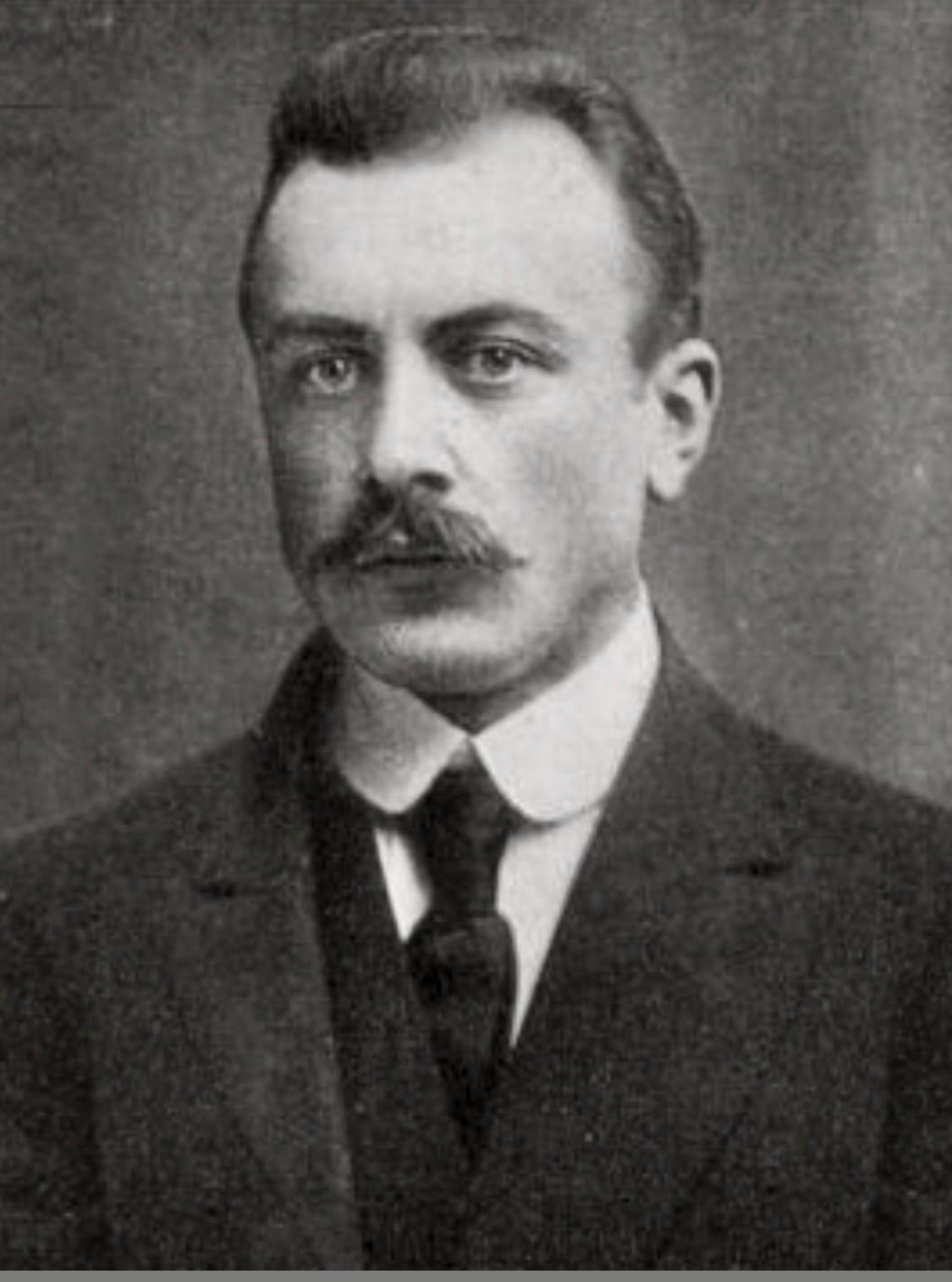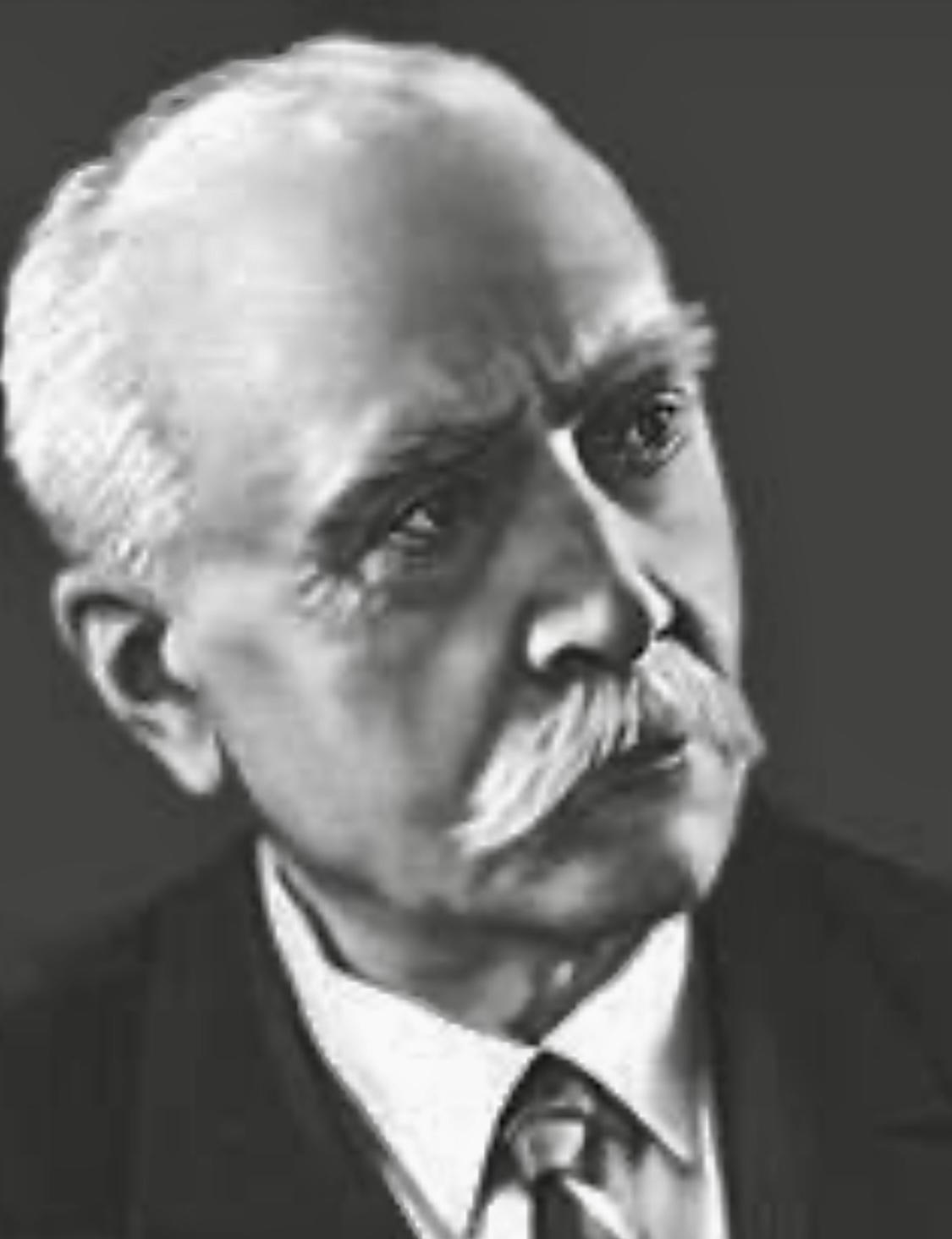


Levko Revuzkyi (1889-1977)
Levko Revuzkyi grew up in an old aristocratic family in which music played a major role. His brother, Dmytro Revuzkyi, was one of the most famous art, music and literature scholars. The brothers are on the list of the 100 most famous Ukrainians.
After the death of his parents, Levko moved to Kyiv, began studying law and took piano lessons with the famous composer Mykola Lysenko. His initial desire to become a piano virtuoso changed under the influence of the composer Reinhold Glière, who was almost his age.
Glière’s innovative experiments inspired him to write his own compositions, which boldly defied existing academic boundaries. Among other things, he wrote the choral cantata “Hystna”, composed piano music and arranged Ukrainian folk songs.
L. Revuzkyi lived through 2 world wars. At the front in Riga in 1917, he found a still intact grand piano in a largely destroyed house. He tried to imitate the sound of the Baltic surf on this piano. In 1921 he added this Prelude in E flat major to the cycle of 2 Preludes op. 7.
The music is filled with a sublime, confident spirit and conveys the image of a calm and majestic seascape using all the piano registers.
After returning to Ukraine when the Bolsheviks had taken power, he and his family were expelled from the family estate; temporarily they had to live in a stable. In 1919, he was arrested and sentenced to death as an “enemy element”. He was only saved by the intervention of his brother Dmytro.
Unemployed as a musician, L. Revutzkyi worked for the railroad, but continued to compose. Among other things, he wrote a choral cantata and piano preludes.
His works are characterized by the use of emotional and expressive harmonies and the variety of tonality in a polyphonic structure.
Revutzkyi’s works were highly appreciated by his colleagues there. He was invited to teach at the Music and Theater Institute of Kyiv (named after Mikola Lysenko).
Revutzkyi won first prize in the All-Ukrainian Competition in 1927 with his Second Symphony, thus laying the foundations for 20th century Ukrainian symphonic music. The musical texture is based on Ukrainian folk poetry with its enthusiasm for nature, the immersion in the surrounding world, the lightness and transparency of the musical images and achieves a sensitivity that is not illustrative but profound and touching.
The scores of both symphonies, the piano concerto and numerous choral and piano works were burned during the Second World War.
The even harsher repression that began in 1930 demanded that artists glorify and serve the Communist Party. Otherwise, they were accused of treason and declared “enemies of the people” with the consequence of being sent to camps or shot.
In Soviet society, all compositional work was subject to strict control by communist ideology. The Composers’ Union took control. Creative drive was stifled, with the result that Revutzkyi hardly wrote any music.
During the Second World War, when Revutzkyi held a chair in composition, music theory and history at the Conversatorium in Tashkent, Uzbekistan, his only son was seriously wounded at the front and his brother and wife were brutally murdered with an axe by Chekists. All his works were destroyed. The loss of his brother had a profound effect on Revutzkyi.
After his close colleague Lyatoshynsky suffered persecution and criticism for his Third Symphony, which is now considered a jewel of Ukrainian symphonic music, Revutzkyi destroyed his own new Third Symphony in order to escape repression.
Revutzkyi returned to liberated Kiev in May 1944. He worked at the conservatory and in the Composers’ Union of Ukraine, which he headed from 1944-1948, and was a member of the board of the Composers’ Union of the USSR. Although he tried to reconstruct his lost works, his creative work beyond this remained rather sparse.
He did, however, enjoy working with students. Many of them belonged to the future elite of Ukrainian music, such as P. and G. Mayboroda, A. Filipenko, M. Dremlyuga, V. Kireyko. Revutzkyi secretly granted many of them “scholarships” from his own income in the difficult post-war years.
Revutzkyi, who had lived through the tragedy of his era, passed on the living core of Ukrainian musical culture to subsequent generations.
Summary: Levko Revutzkyi is one of the most outstanding personalities of Ukrainian musical culture in the middle of the 20th century. The life and creative catastrophe of this artist, who refrained from composing at the height of his powers, must be viewed in the context of the events of Ukrainian history in the last century. The shock of the murder of his brother, the art historian, literary scholar and folklorist Dmytro Revutzkyj, in 1941 and the loss of many of his own manuscripts during the Second World War divided Revutzkyj’s life into two halves: an actively creative period in the 1920s and 1930s, characterized by the Ukrainian Renaissance and Stalinist repression, and several decades of “silence”.
Levko Revutzkyj’s compositional approach is characterized by a deep immersion in the ancient layers of Ukrainian folklore, viewed through the musical world view of the 20th century. The focus here is on neo-folklorism, which comes close to the creative principles of Béla Bartók. His music reveals an intense post-impressionist sense of timbre and harmony, interspersed with moments of powerful expressionist tension, which is particularly often expressed in his piano works. The composer’s piano music is rooted in the traditions of Romantic piano playing, in which songfulness and virtuoso concert design are united.