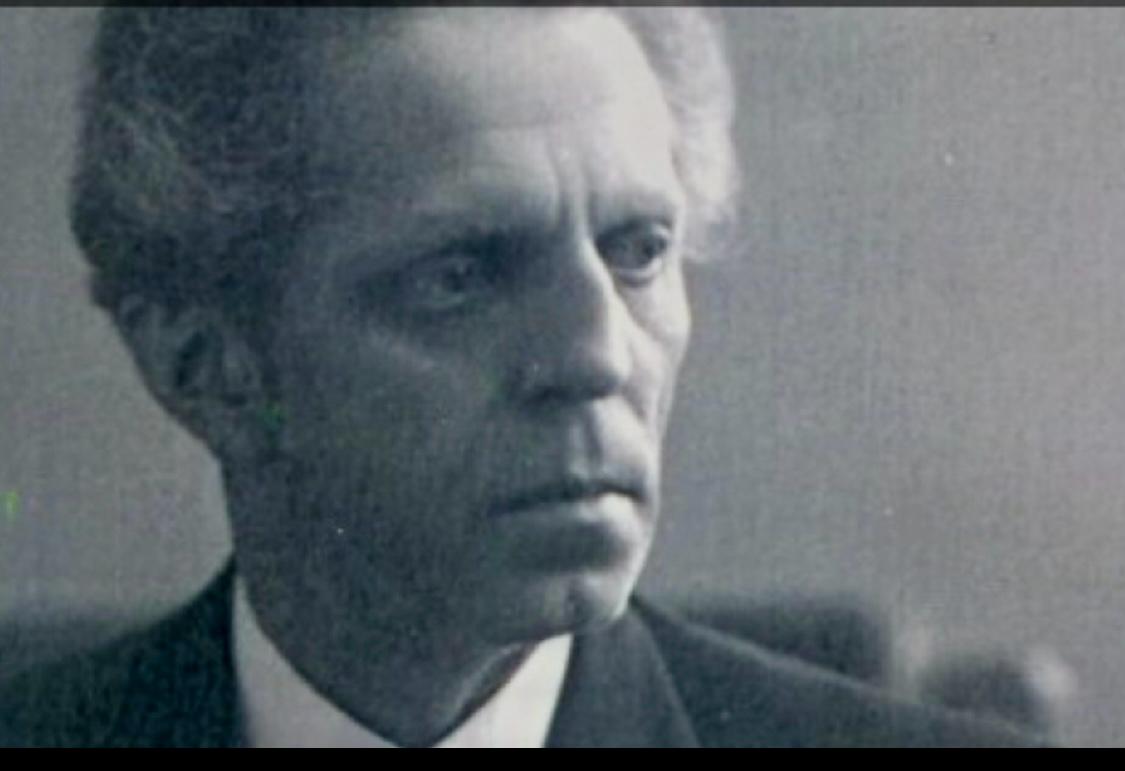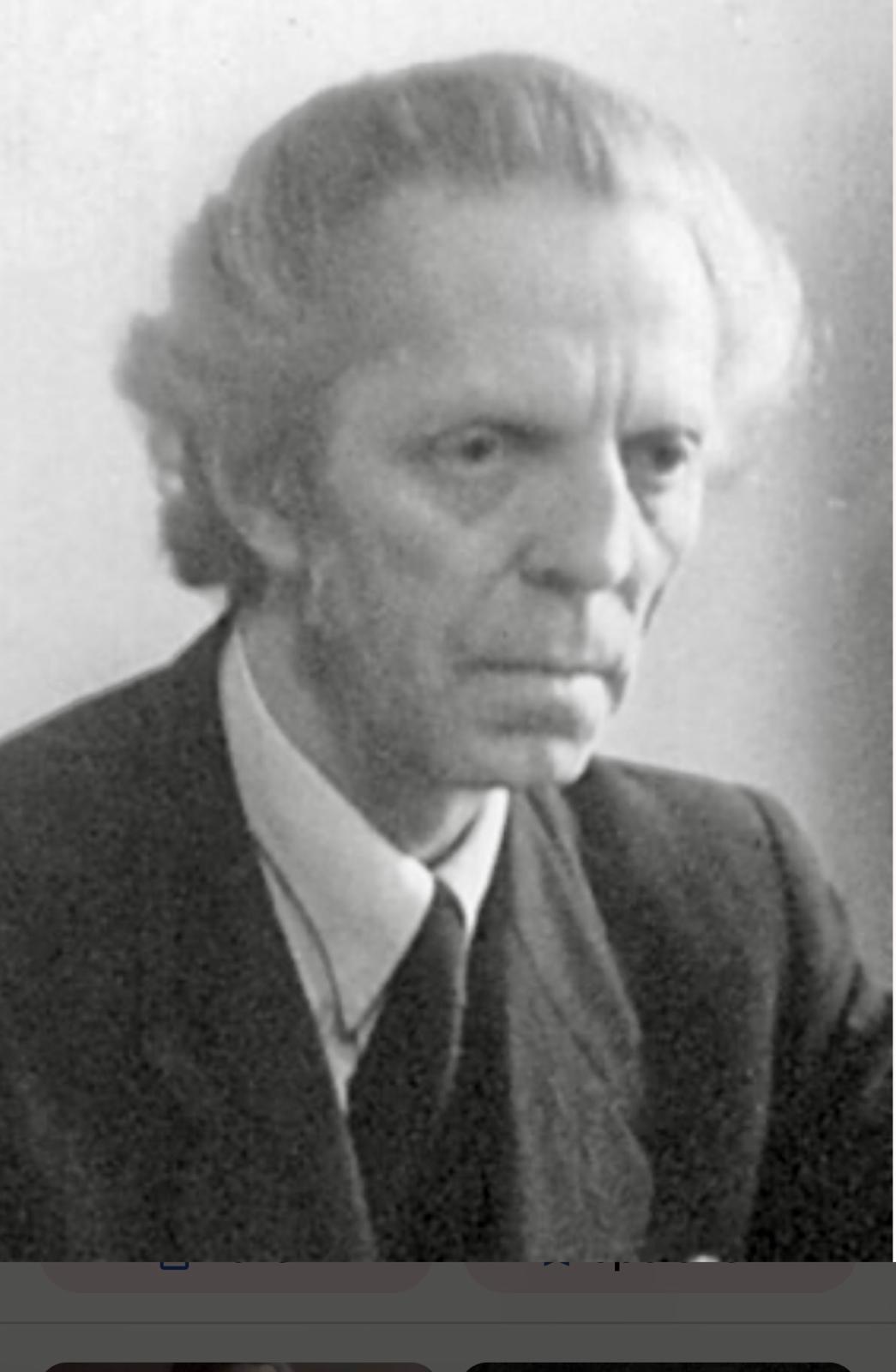


Vasyl Barvinsky (1888-1963)
Vasyl Barvinsky was born in Ternopil in Galicia, eastern Poland. His father was politically active and published textbooks on the Ukrainian language and Ukrainian periodicals. The family moved from Ternopil in Galicia to Lviv. The parents maintained contact with leading figures in Ukraine, including the well-known musician M. Lysenko. He encouraged the parents to have their son trained as a musician.
After beginning his studies in Lviv, Barvinsky continued his studies at the Conversatorium in Prague in 1907 and was already giving concerts as a pianist at the time. After his marriage in 1915, he returned to Lviv. He worked as director of the Lysenko Music Institute in Lviv for 24 years (first under Austrian and then under Polish rule). In the years 1939-1941 and 1944-1948 he directed the conservatory in Lviv.
When American composers such as Charles Ives and Henry Cowell were experimenting with new sounds, Barvinsky developed the “cluster” (playing with the fist or the flat palm of the hand on the piano keyboard), e.g. in the “Froschwalzer” (1910). Cluster sounds can also be found in the piano sonatas in C sharp major and other piano works by the composer.
In the first Ukrainian sonata of the 20th century in C sharp major (1908), Barvinsky combined the classical sonata structure with the structure of a dance suite. In the first movement, he developed the rhythmic-intonatoric and pentatonic core of a siciliano in a very modern monothematic way and ended the finale with a phenomenal double fugue. From 1910 he brought the revolutionary new rhythmic method of Èmile Jaques-Dalcroze to Lviv.
Barvinski was the first Ukrainian whose works found publishers in the USA, Europe and Japan. In Moscow, however, these avant-garde sounds met with rejection. In 1948, he was sentenced to 10 years imprisonment in the Mordovian camps together with his wife for slander. Almost all his works were burned. Works published abroad and copies by his students were preserved. In the Ukraine, however, he was regarded as a “composer without notes”.
He and his wife were housed in neighboring camps. According to the recollections of contemporaries, they held hands during the rare half-hourly contacts and remained silent, as they were not allowed to speak Ukrainian. For the same reason, contact with the metropolitan working opposite him, who was also imprisoned, was also determined by shared silence – and by rubbing bricks together.
The letters that Barvinsky wrote to his wife in the concentration camp (1956-1958) reveal above all his concern for his son, a very talented cellist. He wrote a cello concerto for him in the concentration camp. The tragedy of its genesis is comparable to the creation of other musical works such as Olivier Messaien’s “Quartet for the End of Time”, which he wrote in a concentration camp.
In 1958, after his return from imprisonment, he was not allowed to do any educational work. He was not allowed to enter the building of the Conversatorium. He tried to reconstruct some of his lost works from memory, but he did not have enough time to do so.
Barvinsky’s desire to help shape and promote Ukrainian musical culture was secondary to his personal happiness and prestige, as he would have had the opportunity to achieve worldwide recognition and success.
Barvinsky was also tragically exposed to the repressive behavior of the Soviet state power, which sought to suppress all avant-garde music and labeled Ukrainian art as inferior or ignored it.
Summary:
Barvinsky is a musician who significantly influenced and revitalized musical life in Ukraine at the time. In addition to his compositions, he was also active in the fields of education, journalism, criticism, administration and social and cultural affairs. At the time, he was regarded as one of the brightest and most intelligent representatives of Ukrainian culture with considerable innovative power and compositional stylistics.
The wide range of his works is reflected in his numerous compositions:
(first Ukrainian) Preludes for piano (1908)
(first Ukrainian) Sextet (1915)
(first Ukrainian) Sonata for violoncello (1926)
Author of the Ukrainian cello repertoire (Suite, Variations, Pieces)
(first Ukrainian) sonata for piano (1910)
(first Ukrainian piano concerto (1917-1937)
Symphonic Vocal Fantasy
Numerous other works of various genres